
Why Product Pages Are the Future of Ecommerce SEO Landing Pages in 2026


Why Product Pages Are the New SEO Landing Pages
Imagine you're searching for a new grille for your Ford Ranger after seeing an ad that promises a "perfect fit for the 2023 Ford Ranger Wildtrak." The ad also claims it’s one of the best aftermarket upgrades in Australia, and so you click to learn more.
You expect to find everything you need like vehicle compatibility, installation information, detailed specifications, customer reviews, and photos of the grille fitted to your exact model.
Instead, you land on a generic product page that simply says "Ford Ranger Grille." There's no mention of model year, trim level, facelift compatibility, or whether it fits the Wildtrak. Now, you're left wondering if it's the right part for your vehicle.
As a customer, rather than risking ordering an incompatible accessory, you leave the website and continue searching. After all, a single unanswered question can create enough doubt to stop a purchase.
Regardless of the industry, one moment of uncertainty is often all it takes to lose a sale. This scenario plays out every day across ecommerce. Whether shoppers are buying a performance exhaust, suspension kit, roof rack, or LED headlights, they arrive with a specific purchase intent. If a product page doesn't immediately answer their questions or give them confidence that the product fits their needs, they'll simply click back to Google or other AI tools and choose another retailer.
For years, ecommerce brands treated product pages as little more than digital shelves, a place to display a product, list a few specifications, and include an "Add to Cart" button. If they wanted to rank on Google, the real SEO investment went into blog posts, category pages, or dedicated landing pages targeting specific keywords.
This 2026, that approach no longer reflects how people search or how search engines deliver results. Today's shoppers aren't looking for general information when they're ready to buy. As Agentic Shopping continues to reshape ecommerce, shoppers increasingly rely on AI-powered assistants to research, compare, and evaluate products before making a purchase. Whether they start their journey on Google, ChatGPT, Gemini, or another AI-powered commerce platform, they expect fast, accurate, and trustworthy answers.
That's why product pages have become the new SEO landing pages. Search engines and AI-powered tools are increasingly prioritizing product pages that provide complete information, confirm compatibility, and use structured data that both people and AI can easily understand.
In this guide, you'll learn why this shift has happened, what makes a high-performing product page, and the practical strategies you can use to turn every product page into an SEO asset that attracts qualified traffic and converts more buyers.
How Ecommerce SEO Has Changed
Every digital marketer out there knows that Google's ranking systems increasingly prioritize content that demonstrates experience, expertise, authoritativeness, and trustworthiness or known as Google’s E-A-A-T. Through its people-first content guidance, Google emphasizes that successful pages should provide original, comprehensive information that genuinely helps users achieve their goals, not content created only to manipulate rankings.

However, today, ecommerce SEO is shifting from simply attracting visitors to helping customers make confident buying decisions. While educational content still plays an important role, search engines have become far better at understanding why someone is searching, and not just what they type.
For ecommerce brands, this means product pages can no longer be treated as basic catalogs. They need to become complete resources that help shoppers understand products, compare options, and take action.
From Ecommerce Blog Content to SEO Product Page Discovery
For years, many ecommerce businesses invested heavily in blog content because informational keywords were easier to target and helped attract users during the early stages of the buying journey. For example, a customer searching for, "how to choose the right suspension kit", "best materials for kitchen sinks", or "benefits of ergonomic office chairs"— these are the questions customers asked before, showcasing they are still considering options, and gathering information before making a final decision.
However, searches such as, "Toyota Hilux grille replacement Australia", "Ford Ranger exhaust system", "Black ergonomic office chair with lumbar support", "Modern bedside table with drawers" show stronger purchase intent. These shoppers are no longer just exploring ideas, they are actively looking for a product that solves a specific problem and are closer to making a purchase.
This shift has changed how search engines evaluate ecommerce pages. Instead of rewarding pages that simply include keywords, search engines now prioritize pages that provide complete, relevant, and helpful information that matches the user's search intent.
For ecommerce brands, this means product pages must go beyond basic product listings. They need to provide the information shoppers need to make confident buying decisions, including:
- Product specifications
- Compatibility information
- Pricing details
- Product availability
- Customer reviews
- High-quality images
- Shipping information
- Frequently asked questions
Google recommends that ecommerce businesses add product structured data directly to their web pages. A Merchant Center feed is no longer required to qualify for rich product experiences, structured data alone can now make a page eligible for merchant listing experiences, which previously depended on a Merchant Center feed. That said, providing both structured data and a Merchant Center feed still maximizes eligibility across all of Google's enhanced product experiences, since some features blend data from both sources.
The Rise of AI-Powered Product Discovery
Modern search is no longer about finding the page that mentions a keyword the most times. It's about finding the page that best answers the user's next question. Shoppers are increasingly using AI-powered assistants to research, compare, and evaluate products before making purchasing decisions.
Instead of searching through dozens of websites manually, customers can now ask AI tools to help them find products that match specific requirements.
For example: "Find a Ford Ranger grille that fits a 2023 Wildtrak, has positive reviews, and is available in Australia."
To appear in these AI-driven recommendations, brands need product pages that provide clear, structured, and trustworthy information. AI systems need context like the following:
- What is the product?
- Who is it designed for?
- What vehicles or use cases does it support?
- What makes it different?
- Why should customers trust it?
This makes product page optimization more important than ever. The future of ecommerce SEO is not just about ranking higher on Google, it is about making products understandable to both humans and AI systems.
Why Product Pages Have Become SEO Landing Pages
Historically, ecommerce businesses treated informational and commercial search intent as two separate strategies: blog content captured users researching a topic, while product pages targeted customers ready to buy. However, that distinction has become less defined. Today, search engines increasingly understand that many searches that appear informational can also signal purchase intent.
Product pages have become the new SEO landing pages because they now perform the same role as traditional landing pages while also capturing organic search traffic. They attract high-intent visitors, provide valuable product information, build trust, and guide customers toward a purchase decision.
Every product targets high-intent keywords. A well-optimized product page naturally aligns with specific searches based on the product model, size, material, features, compatibility, or intended use. For example, a customer searching for a "Toyota Hilux grille replacement Australia" or "ergonomic office chair with lumbar support" is not looking for general information—they are looking for a solution they can evaluate and purchase.
Furthermore, product pages also answer the questions that influence buying decisions. Instead of forcing customers to visit multiple pages, a comprehensive product page brings together the information they need, including specifications, compatibility details, pricing, availability, reviews, warranties, and frequently asked questions.
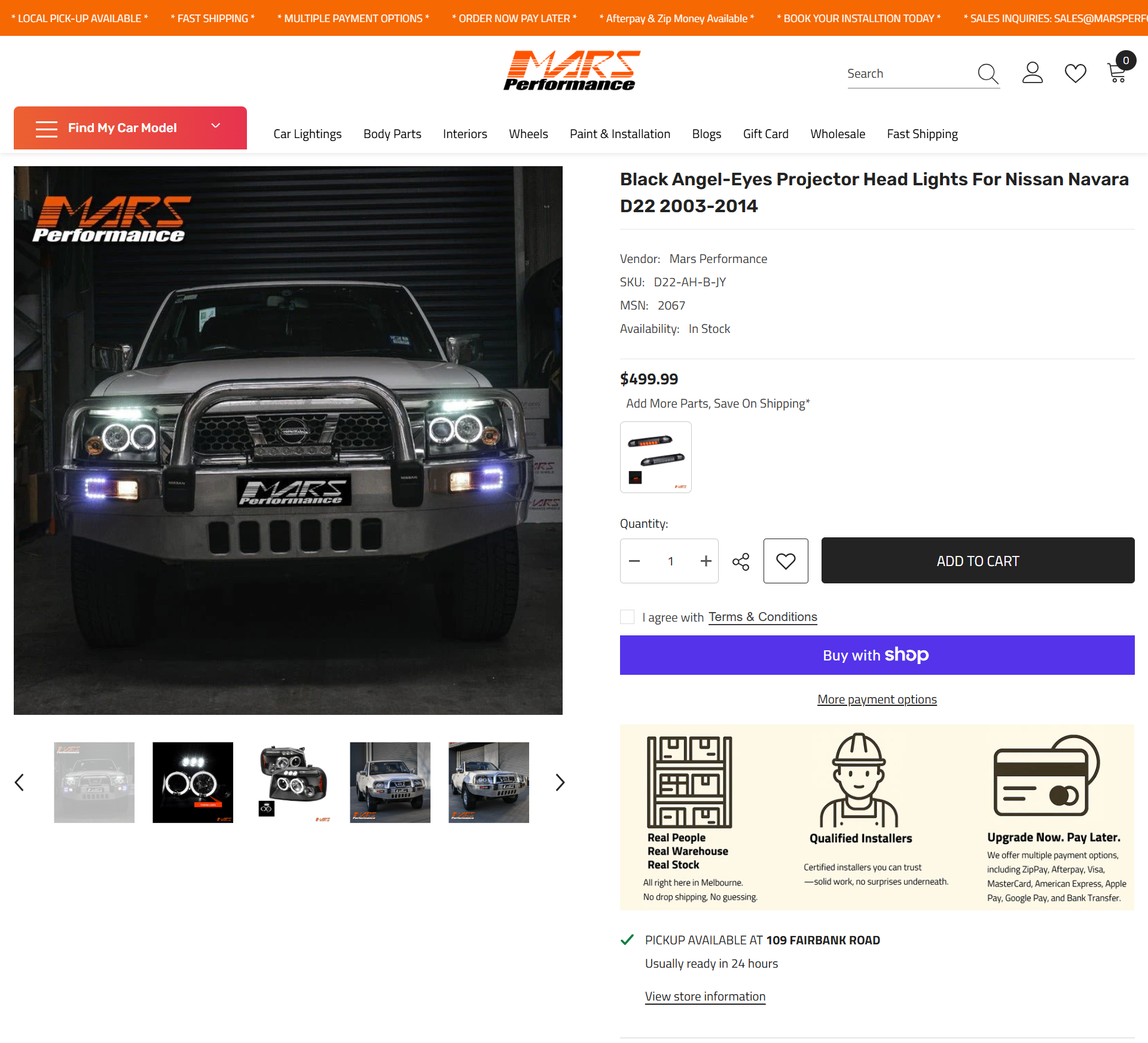
When product pages provide accurate, detailed, and trustworthy information, they create a better experience for both customers and search engines. Clear product details, real customer reviews, expert information, and transparent policies demonstrate credibility and help shoppers make confident decisions.
This Mars Performance product page is more than an online catalog entry, it showcases everything you need to know and makes sure you have everything you know.
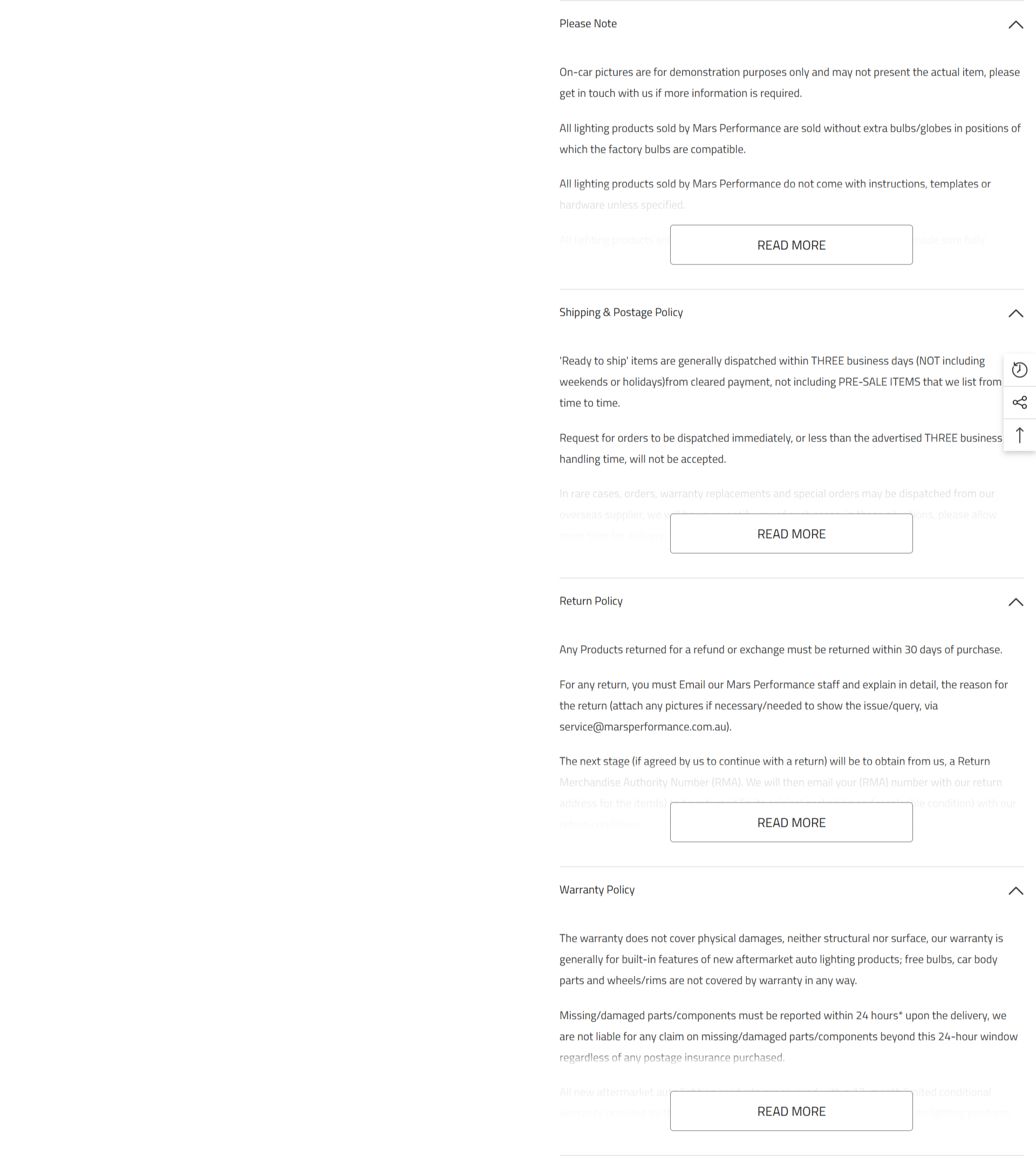
As search continues to evolve, product pages have become central to ecommerce visibility and has become an asset to SEO. They do more than attract clicks, they connect search intent with purchasing decisions by helping customers discover, evaluate, and confidently choose the right product.
What Makes an SEO-Friendly Product Page?
Creating an effective product page requires balancing search engine optimization with an exceptional customer experience. A product page should help search engines understand the product while giving customers the information they need to make confident purchasing decisions.
The best ecommerce product pages include:
- Relevant keywords incorporated naturally
- Detailed and original product information
- High-quality product images and videos
- Clear features and customer-focused benefits
- Trust signals, such as customer reviews and ratings
- Shipping, returns, and warranty policies
- A clear and compelling call-to-action (CTA)
- Structured data
- Customer reviews and questions & answers (Q&A)
- A comprehensive FAQ section
- Fast page speed and mobile-friendly design
- Clean, short, and descriptive URL structures
- Proper tags for product
Every unanswered question creates uncertainty. Whether customers are wondering about compatibility, sizing, shipping, installation, or returns, even a small doubt can prevent them from completing a purchase.
Remember, a successful ecommerce businesses don't wait for customers to become confused. They anticipate questions and answer them before they arise.
How AI Is Changing Product Page SEO
Artificial intelligence is transforming how ecommerce businesses create, manage, and optimize product pages. Instead of manually updating hundreds or thousands of products, AI can help teams produce high-quality content more efficiently while maintaining consistency.
However, AI works best when guided by human expertise and accurate product data. Businesses should review AI-generated content to ensure it reflects their brand voice, product knowledge, and customer expectations.
AI can support product page optimization by helping teams:
- Generate unique product descriptions
- Create product FAQs based on common customer questions
- Suggest SEO titles and meta descriptions
- Identify missing product information
- Optimize large product catalogues more efficiently
When combined with human review, AI helps businesses strengthen ecommerce SEO without sacrificing quality.
Conclusion: Strengthen Your Product Page SEO Strategy
Search continues to evolve as AI-powered search engines and shopping assistants reshape how customers discover and evaluate products. As these technologies become more sophisticated, businesses that invest in comprehensive, trustworthy, and well-structured product pages will be better positioned to increase their visibility across multiple discovery channels and reach shoppers throughout their buying journey.
Product pages are no longer just digital catalogue entries. They have become the primary destination where discovery, evaluation, and purchasing come together. For ecommerce businesses, this presents a significant opportunity.
By treating every product page as an SEO landing page, you can attract high-intent shoppers, improve organic visibility, strengthen customer trust, and increase conversions without relying solely on paid advertising.
Now is the time to audit your product pages. Review the content, strengthen your technical SEO, improve the user experience, and ensure every page answers the questions your customers ask before they buy.
The businesses that invest in better product pages today will be better positioned to compete in the future of ecommerce search.
At Local Threads Brand Solutions (LTBS), we've seen this shift firsthand while working with ecommerce brands across a range of industries such as aftermarket, furniture, SaaS, and other more. Additionally, businesses that invest in well-optimized, customer-focused product pages consistently create stronger shopping experiences and lay the foundation for sustainable organic growth.
If you're ready to strengthen your product page SEO strategy, our team can help you create high-performing product pages that increase visibility, attract qualified traffic, and drive more conversions. Whether you're optimizing an existing catalogue or launching new products, LTBS provides the SEO, content, and ecommerce expertise to help your business stay competitive as search continues to evolve.
Ready to turn your product pages into powerful SEO landing pages? Partner with LTBS today to create product pages that attract high-intent shoppers, convert more visitors into customers, and improve your organic search performance.