
Australia SMS Sender ID Register 2026 Guide: What Happens If You Don’t Register

Adam Baodunnov
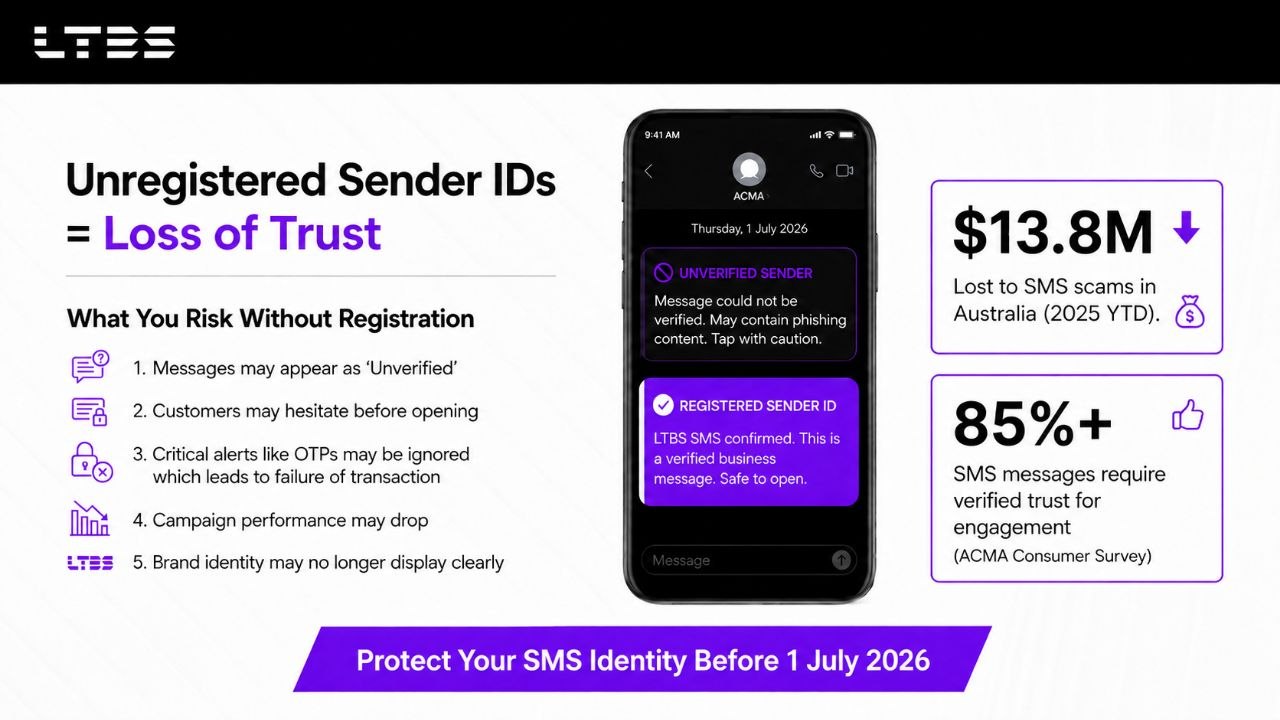
Australia’s SMS Sender ID Register Effective on July 1
Imagine sending an important customer update, only for people to pause and wonder, “Is this actually from the business?” Starting this July, customers may begin viewing business messages differently as Australia’s SMS Sender ID Register takes effect.
So, even if you do everything right like sending out a marketing SMS to promote upcoming campaigns such as the End of Financial Year Sale (EOFY), your communications could still face issues especially if you do not register your Sender ID with the Australian Communications and Media Authority (ACMA) effective on July 1.
Do you ever wonder how this could affect your business? Well, customer trust, engagement rates, and time-sensitive communications may all be at risk, and that’s why we’re here to help. In this guide, we’ll explain what changes, what it means for your business, and what steps you should take next.
What Is Australia’s SMS Sender ID Register?
How does one fall victim to an SMS scam? Well, have you ever received a text message from a known business or shipment provider like AusPost or shopping alerts from Alo or H&M? Those names you received are usually called SMS Sender ID (alpha tag).
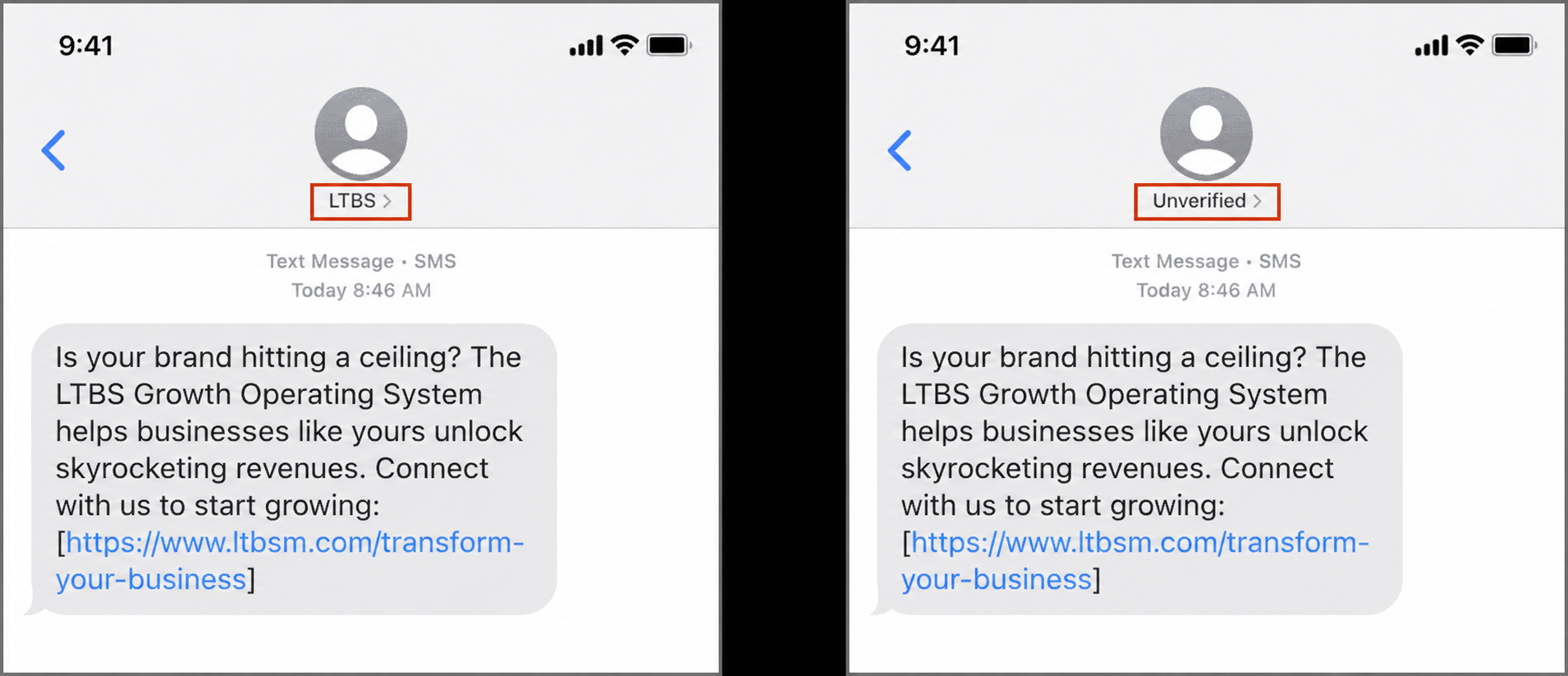
It is the name displayed at the top of a text message that identifies who sent the message. However, despite displaying a familiar Sender ID, that’s where fraudsters often come where they usually impersonate trusted brands and companies to steal your data, your money, or both.
Text message marketing has become one of the most effective ways for businesses to reach customers and after Australia lost around $13.8 million to text message scams during the first several months of 2025 alone, ACMA introduced an important change to Australia's communications landscape.
Australia's SMS Sender ID Register, also known as the ACMA Sender ID Register, serves as the government's response to growing SMS fraud concerns, this initiative is to crack down on scam and spam text messages across Australia. Under the new framework which is going to take effect on July 1, 2026, telcos must block or identify SMS messages sent from unregistered alphanumeric Sender IDs.
Why Does ACMA Sender ID Register Matter?
The ACMA Sender ID Register is more than a regulatory requirement. It aims to protect consumers and businesses from SMS impersonation scams by verifying the sender names that appear in branded text messages.
In addition, branded SMS plays a major role in customer communication because businesses commonly use branded Sender IDs for appointment reminders, delivery updates, one-time passwords (OTPs), account alerts, and promotional campaigns. However, if customers can no longer immediately recognize who sent a message, trust and engagement may suffer.
This matters to every business because text message marketing directly drives customer engagement for many eCommerce businesses, when your brand faces doubts and uncertainties because of your SMS you may face customer trust that will affect performance and revenue. As a result, regulators and network providers are working closely with the government's initiative to combat these fraud and scam text messages.
What’s Changing in Australia?
Starting 1 July 2026, Australia’s new SMS Sender ID framework will introduce several important changes for businesses that rely on branded text messaging.
Under the new requirements:
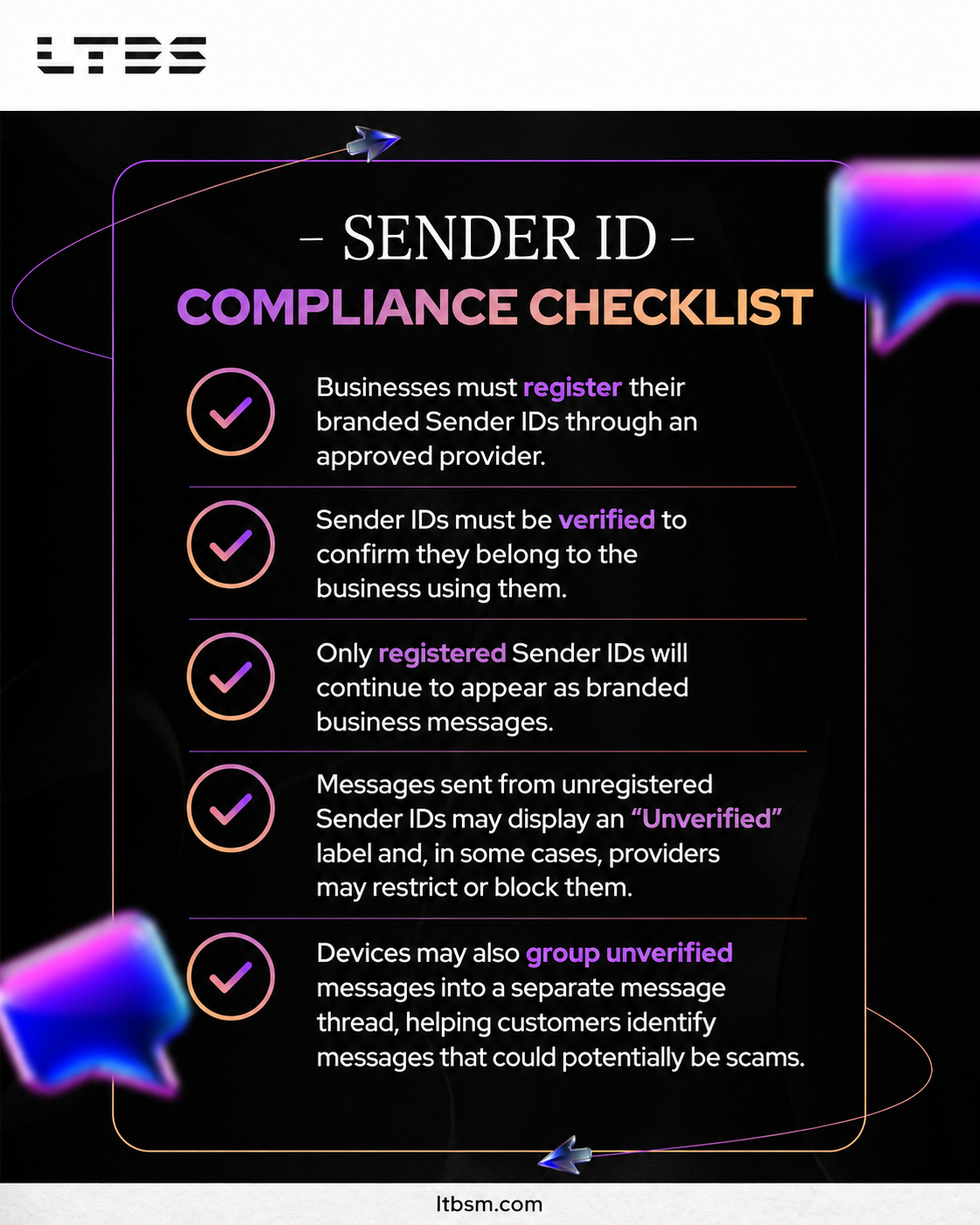
These changes aim to make it easier for customers to identify legitimate businesses while reducing SMS impersonation and fraud risks.
Hidden Business Risks If You Don’t Register for Australia’s SMS Sender ID Register
No matter what business you’re in, whether you’re in the automotive, stone, furniture, personal home care brands or business, you will face the businesses risk once Australia SMS Sender ID took effect and you’re still unregistered.
Hidden Business Risk #1: Loss of Customer Trust
Customers are already on high alert for scams, and consumers have become increasingly cautious about the SMS messages they receive. People now actively look for warning signs in payment reminders, account notifications, and account verification requests—messages they typically double-check before they engage.
If your business appears as unverified or unclear in SMS communications, you risk losing customer trust and, ultimately, revenue. When customers hesitate to recognize your sender identity, they are more likely to ignore your messages or treat them as suspicious.
Hidden Business Risk #2: Reduced Engagement and Disruption to Time-Sensitive Communications
SMS campaigns often depend on immediate recognition and action. If recipients hesitate to trust the sender, engagement can decline.
Potential impacts include:
- Lower message open rates
- Reduced click-through rates
- More ignored or deleted messages
- Lower campaign effectiveness
Although ACMA has not yet released specific performance statistics for open rates or click-through declines under the new system, they still stated that “Unverified” labels can reduce customer confidence and disrupt communications.
Industries That May Experience Stronger Effects
Certain industries rely heavily on branded SMS for time-sensitive, high-trust communications, which means they may feel the impact of the Sender ID Register more strongly.
1. Retail
Retailers frequently use SMS for promotional offers, loyalty program updates, and major sales campaigns such as EOFY, Black Friday, Cyber Monday events. These messages depend on instant recognition and trust to drive quick customer action.
2. Healthcare
Healthcare providers use SMS for appointment reminders, schedule confirmations, and follow-up notifications. These messages are critical for attendance and continuity of care. Any hesitation caused by sender uncertainty may lead to missed appointments or communication breakdowns.
3. Financial Services
Banks and financial institutions send payment reminders, transaction alerts, and security notifications like OTP’s through SMS. Because these messages involve sensitive account activity, trust is essential. If customers ignore an OTP message because it appears unverified, they may fail to access an account or complete a transaction.
4. Logistics and Delivery Services
Logistics companies also rely on SMS for delivery updates, shipment tracking, and real-time notifications. Customers expect immediate and reliable updates, and unclear sender identity can create confusion, missed deliveries, or increased customer support inquiries.
Hidden Business Risk #3: Brand Reputation Damage
SMS has traditionally been viewed as a direct and trusted communication channel because customers usually receive messages from recognizable businesses, service providers, or organizations. However, sender identity strongly influences that trust. When messages display “Unverified” instead of a known business name, recipients may question whether the communication is genuine.
Over time, this creates risks beyond individual campaigns and brand trust can decline even when messages are legitimate. ACMA notes that using registered Sender IDs helps reduce customer confusion and lowers the risk of reputational damage caused by impersonation attempts.
Hidden Business Risk #4: Operational and Compliance Challenges
For many organizations, Sender ID registration involves far more than simply registering a business name. It requires a full audit and coordination of how SMS is used across the entire business ecosystem.
1. Multiple Sender IDs Across Departments
Large organizations often operate multiple Sender IDs across different functions from marketing, customer support, finance, logistics, and security teams. Each of these IDs may need to be individually identified, verified, and registered. Without proper mapping, businesses risk missing active sender IDs that continue sending messages without compliance coverage.
2. Third-Party Messaging Platforms
Many businesses do not send SMS directly. Instead, they rely on CPaaS providers, SMS gateways, or marketing automation platforms. These external systems introduce complexity because Sender ID registration must be coordinated between the business and multiple vendors. Misalignment between providers can lead to delays, mismatched sender identities, or failed registration attempts.
3. Registration Timelines and Processing Delays
ACMA encourages businesses to register early, as last-minute submissions may face processing delays or verification bottlenecks. High volumes closer to enforcement deadlines can further slow down approvals, increasing the risk of disruption to SMS campaigns and critical communications.
4. Documentation and Validation Requirements
Businesses may need to provide supporting documentation such as Australian Business Register (ABR) details, trademark evidence, or proof of Sender ID ownership. Sender IDs must also align clearly with registered business names or brands. Any inconsistencies can trigger rejections or additional verification steps.
5. International and Multi-Provider Environments
Global organizations or companies operating across multiple SMS providers face added complexity. Different regions and vendors may follow different registration workflows, technical requirements, or verification standards. This increases the risk of inconsistent Sender ID usage across markets.
6. Key Operational Challenge
In many cases, the biggest challenge is not the registration process itself, it is identifying every Sender ID currently active across systems, departments, and third-party platforms. Without a centralized audit, businesses risk leaving unregistered sender identities in circulation, which could lead to message degradation, labeling as “Unverified,” or delivery issues after enforcement begins.
SMS Compliance Is Also a Customer Experience Issue
The July 2026 deadline is not simply about regulatory compliance. It directly affects how customers perceive, trust, and engage with your communications. When SMS messages display clear, verified Sender IDs, customers are more likely to open, trust, and act on them.
However, if messages appear as “Unverified” or unclear, customers may hesitate, even if your message is legitimate. Furthermore, this makes SMS compliance not just a technical requirement, but a core part of customer experience strategy under evolving SMS regulations Australia 2026.
Preparing Your Business for SMS Sender ID Registration
Australia’s SMS Sender ID Register represents a major shift in how businesses manage branded messaging. As ACMA Sender ID requirements take effect, organisations must ensure their systems, providers, and sender identities are fully compliant. Remember, we're just almost a month away from its effectiveness, failure to prepare could lead to reduced trust, lower engagement, loss revenue, and potential disruption to critical communications.
Whether you’re running marketing campaigns, transactional alerts, or automated customer flows, your SMS setup needs to be compliant, verified, and future-ready because now is your time to act.
Work With LTBS to Stay Compliant and Protected
Don’t wait for messaging issues to appear after enforcement begins. Get in touch with LTBS today and let’s ensure your SMS communications remain trusted, compliant, and high-performing under the new SMS Sender ID Register Australia.