
Digital Marketing Attribution for Furniture Brands: Why Australian Retailers Get It Wrong

Adam Baodunnov

Why Australian Furniture Brands Misread Attribution
If you run a furniture business in Australia, chances are you’ve asked this question more than once: “Which marketing channel is actually driving our sales?” You review your analytics, look at the numbers, and feel confident you know the answer.
Your funnel looks healthy at first glance. Google Ads are profitable. Brand search converts. Sales keep ticking over.
Across multiple Australian furniture accounts we’ve audited, we consistently see the same pattern that is often uncovered during a comprehensive furniture marketing funnel audit: an obsession with direct attribution masks what’s actually driving demand. As a result, brands optimise for short-term efficiency at the expense of long-term growth, and most brands don’t realise it until performance plateaus.
Most Australian furniture brands don’t suffer from poor performance. They suffer from false certainty. Revenue gets credited to the final click, budgets shift toward whatever “converted last,” and teams deprioritise anything that doesn’t show immediate ROI. On paper, this looks logical. In reality, it’s a flawed shortcut that rewards the end of the journey while ignoring everything that made the purchase possible.
Attribution sits at the centre of this problem. It remains one of the most misunderstood and misused concepts in digital marketing. At LTBS, we help Australian furniture brands fix attribution blind spots and build sustainable, system-led growth.
What is Attribution?
The customer journey is not linear, it doesn’t move neatly from awareness to conversion. It’s not linear, like how every business wants it to be. Instead, customers move back and forth. They discover various brands, researching options, comparing competitors, leaving, returning, and only then deciding whether to purchase or walk away.
This is where attribution comes in.
Attribution is the process of understanding which marketing touchpoints contribute to a sale and not just where the final click came from. In furniture marketing, conversions are rarely driven by a single channel. They result from multiple channels working together across a long buying journey.
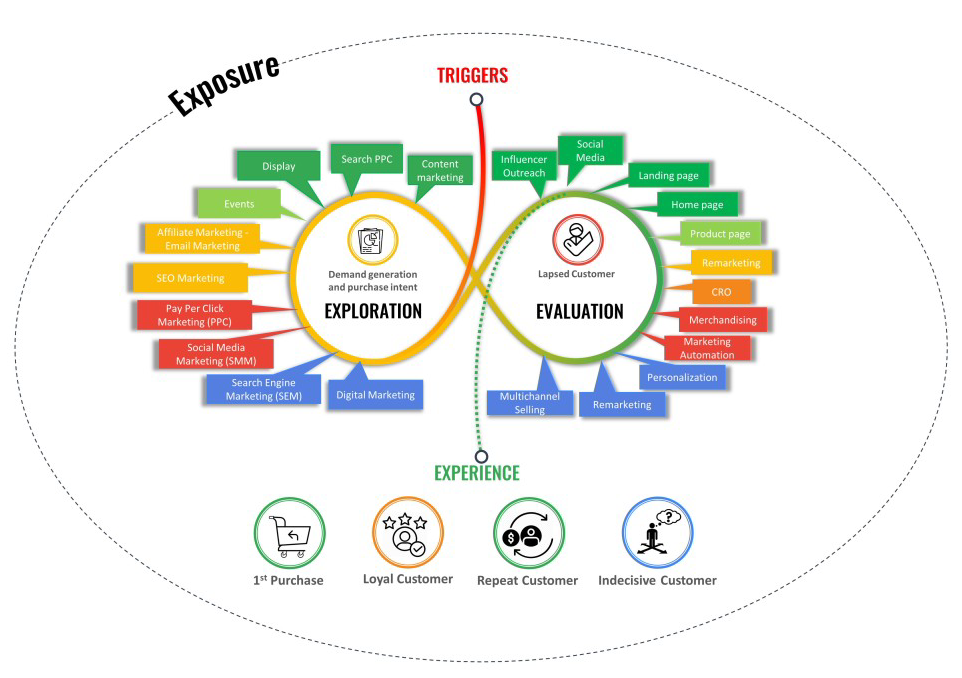
A customer might first discover your brand through organic search, see a paid ad days later, return via social media, add a product to their cart, leave again, and finally convert through brand search. Each interaction influences the decision, even if only one receives credit.
Why Attribution Is Broken for Furniture Brands
Rather than operating with clarity, many furniture brands work with siloed data, partial visibility into buyer journeys, and attribution frameworks that favour the wrong channels. The Association of National Advertisers estimates that 25% of programmatic ad spend is wasted due to inefficiencies and misattribution, underscoring the real cost of poor measurement.
Furniture is not an impulse purchase like every chip you can find in a store. No one sees a sofa on Instagram and checks out five minutes later. This 2025, we have seen Aussie furniture shopping behaviour where they actively move between online research and offline validation before committing to a purchase. Despite this, most furniture brands still fail to understand how their customers actually buy.
The issue deepens because most analytics platforms still default to last-click attribution. The final interaction receives all the credit, while the channels that influenced the decision earlier get overlooked.
SEO gets labelled as underperforming.
Content marketing appears non-converting.
Social media is dismissed as top-of-funnel only.
Meanwhile, paid and branded search receive disproportionate credit for outcomes they did not create alone.
This approach isn’t just inaccurate. It actively undermines long-term growth.
The Hidden Cost of Last-Click Thinking
When furniture brands rely too heavily on last-click or single-channel attribution, they make reporting hard. Over time, there are real financial consequences and growth limitations:
1. ROI Misallocation Across Channels
Last-click attribution systematically over-rewards bottom-funnel activity while starving the channels responsible for awareness and consideration, leaving the top and middle of the funnel underinvested.
SEO, content, and upper-funnel paid media appear to not convert” because they rarely close the final transaction. At the same time, branded search and retargeting often look like top performers because they capture customers at the final moment of intent.
As a result, the channels that actually generate interest and brand preference are quietly deprioritised. As a result, the channels that generate interest and brand preference get deprioritised, while the easiest-to-credit channels receive increased investment, not because they create demand, but because they capture it
2. Short-Term Channels Are Over-Rewarded
Channels that happen to sit at the end of the journey such as paid search, branded keywords, retargeting ads, and direct traffic often appear to be the strongest performers because they capture demand at the point of purchase. But the truth is, they convert well not because they created intent, but because they capture customers who have already made a decision.
Attribution systems frequently mistake conversion efficiency for demand creation. As a result, these channels receive more investment, even though they rely on demand generated elsewhere.
Short-term channels should support growth, not replace it. When brands over-reward them, they optimise for immediate returns at the expense of long-term scalability.
3. Wasted Spend and Missed Growth Opportunities
Incomplete attribution doesn’t just distort reporting, it actively wastes money.
Brands over-retarget customers who have already decided to buy. They compete against themselves across paid channels without realising it. Rising acquisition costs are treated as performance problems rather than measurement failures, leading brands to increase spend just to maintain previous results.
The most expensive cost is what brands fail to see. While competitors grow by investing aggressively in the channels that create demand, many brands hesitate because those channels don’t show up clearly in attribution reports. Broken attribution systems hide high-performing channels simply because they don’t convert through a clean, trackable path.
As a result, high-engagement audiences go undervalued. Effective content gets underfunded. Growth stalls not because opportunity disappears, but because brands fail to recognise what’s working, and fail to scale it.
In reality, your highest-performing channels often educate buyers, build trust, reduce decision doubt, and, most importantly, increase branded search demand. They form the backbone of your business. Without them, your brand becomes harder to find, less visible, and less trustworthy to new customers. The problem is that these channels rarely receive the credit they deserve.
What Strategic Attribution Looks Like for Furniture Brands
There’s no such thing as a perfect strategy because it doesn’t exist. Tools don’t fix misaligned thinking, and most furniture brands still allocate budget based on who “closes” the sale, not who made it possible. Which is also why a strategic attribution execution exists which means making better growth decisions with directional clarity, especially in a category where purchase journeys are long and rarely linear.
For furniture brands, effective attribution starts with understanding how channels work together, not which one “wins.” The goal is to identify which touchpoints create demand, which ones nurture consideration, and which ones capture intent, then invest accordingly.
Prioritises Influence, Not Just Conversion
Top of the funnel are the biggest contributors to your business because they are in-charge of increasing awareness and education to shoppers. Strategic attribution recognizes that channels like SEO, content, and social rarely deliver the final click, but they play a critical role in discovery, education, and brand trust. These channels influence buying decisions long before a customer is ready to convert.
Instead of asking, “Which channel converted?”, high-performing furniture brands ask, “Which channels consistently appear in successful customer journeys?” This mindset shift changes everything. It allows brands to invest in channels that perform over time, accept that not all value is immediate or linear, and design marketing systems rather than isolated campaigns—which is where growth becomes sustainable.
Separates Demand Creation from Demand Capture
Every furniture brand should clearly and sustainably distinguish between demand creation and demand capture. Demand creation educates unaware customers, builds interest in a problem and its solution, and lays the groundwork for future conversions.
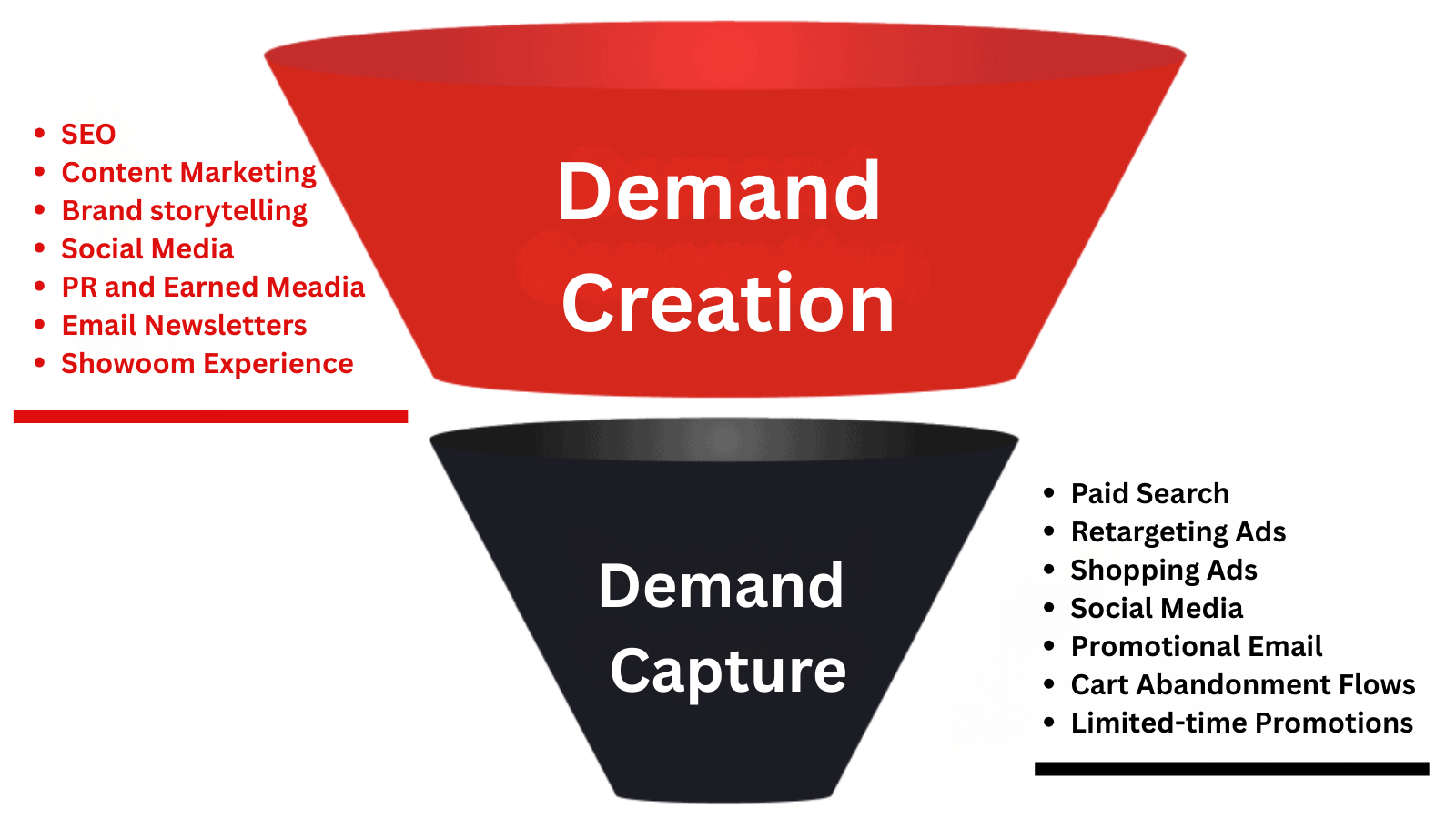
A demand capture, on the other hand, targets problem-aware buyers who actively search for a solution, helping customers convert through channels such as retargeting and paid search.
Remember, the key is to balance them both because a strategic attribution ensures both are measured and funded, correctly. When demand creation is under-invested, demand capture channels become more expensive and less effective over time.
Uses Assisted and Path-Based Insights
Rather than relying on last-click reports, strategic attribution looks at:
- Assisted conversions
- First-touch and early-touch impact
- Common conversion paths
- Channel overlap and interaction
These insights don’t need to be perfect to be useful. They simply need to reflect reality more accurately than last-click models.
Supports System-Led Growth Decisions
When teams cannot clearly see why a channel is performing, they rarely act on it with confidence. Strategic attribution requires transparent, data-backed reporting that enables teams to allocate budgets deliberately and deploy channels with purpose.
When reporting is clear and consistent, furniture brands can confidently scale the channels that appear early and often in high-value buying journeys. This clarity creates alignment across teams, builds internal trust, and protects long-term investment in SEO and content, even when short-term ROI fluctuates.
Additionally, paid media should amplify existing demand, not replace it. When brands apply this principle, decisions become informed rather than reactive. This strategic approach ensures they rely on repeatable patterns across the system, not isolated metrics or short-term wins.
The Attribution Reality and What Smart Brands Do Next
If your marketing feels busy but growth feels fragile, the issue may not be execution. It may be the lens you’re using to judge success. If you’re undervaluing SEO, content, or brand-building because it doesn’t convert, you’re likely cutting the very channels that make everything else work.
Australian furniture retail is competitive. Margins are tight. Paid media alone is not a long-term strategy. Remember, the brands that win are the ones that understand their full funnel, not just the final click.
Partner With LTBS to Fix Your Attribution
At LTBS, we approach attribution not as a reporting exercise, but as a growth framework that aligns marketing activity with long-term commercial outcomes. Attribution challenges don’t resolve themselves, and no single tool fixes them overnight. Every platform has limitations, and fragmented data remains a reality for most brands.
Brands that build robust measurement systems today gain a clear advantage over competitors still relying on broken attribution models. If you want a clear, honest view of which channels create demand and which ones simply capture it, LTBS can help.
LTBS is your strategic growth partner in the digital marketing space, working with both direct-to-consumer and B2B brands. Experience matters here and that’s what we have and do. We help brands make smarter investment decisions by focusing on how marketing actually drives growth, not just clicks, impressions, or isolated conversions.
Our role is not to prove that one channel “won.” Our role is to help brands understand:
- How awareness turns into trust
- How trust turns into consideration
- How consideration turns into conversion
- Where marketing investment truly influences each stage
You can’t optimise what you can’t measure clearly, that’s where we come in. When brands gain clarity across the full system, decisions become calmer, more confident, and far less reactive. Budgets stop swinging. Strategies stop resetting. Growth starts compounding.
Our focus is simple: fix attribution blind spots, identify undervalued growth channels, scale what actually creates demand, and make your marketing stack work as one system. This approach enables confident budget allocation, faster optimisation cycles, fewer debates about attribution, and more momentum behind what truly drives growth.
If your current system leaves you guessing about what drives growth, let's fix that. It’s time to know your growth trajectory because the smartest brands are the ones that see the full picture. Are you ready to level up?